The world is building three gigantic ocular telescopes whose size will dwarf anything we have today . It is hoped these three collectively will suffice some of the big question of the existence that have proven beyond subsist legal document . However , a propose National Science Foundation ( NSF ) budget hood put one leg of the stool in peril .
Despite the ongoing wonders the JWST has bring out , the hereafter of astronomy is not in space alone . We can build much bigger telescope on the primer coat than we presently can in infinite , and it ’s also much easier to fix , maintain , and upgrade them here . plan for a telescope on the Moon with an accompanying infrastructure are far in the time to come .
The projects in which astronomers resttheir medium - term hopesare theGiant Magellan Telescope(GMT ) , theThirty MeterTelescope(TMT ) , and theExtremely Large Telescope(ELT ) , along with those like theSquare Kilometer Arraythat run at wavelengths far beyond the human eye ( confusingly , all three are sometimes referred to as Extremely Large Telescopes , not just the ELT ) . Even with the atmospheric state in the way , each would extend firmness of purpose far sharper than the JWST .

A comparison of existing and proposed telescopes shows just how much larger the big three will be than anything currently operating.Image credit: Cmglee (data on holes in mirrors provided by an anonymous user from IP 71.41.210.146) viaWikimedia Commons(CC BY-SA 3.0)
However , a fresh proposal would quarrel one of the first two .
Astronomy is so collaborative many may not manage who will ramp up and own them , but the TMT and GMT are to be American - leave , while the third is a coaction of European and South American countries . That gives the ELT a degree of insurance against budget cut . None of the consortium partners want to look bad in front of the others by going back on their commitments . Work on the ELTstarted in 2017 . It takes a long time to build something so enormous that also needs to be so precise , so first light is not expected to happen until 2028 . Even if there are wait , there are few doubts it will happen finally .
The TMT and the GMT , however , are both American projects , even if the latter will be based in Chile . financing for the GMT is primarily from the USA ’s NSF via a slate of university and scientific institutions , even ifsix other countries are bring . The TMT is an even more American projection , despite Indian , Japanese , and Canadian intimacy ; it was originate by two California universities and planned to be based in Hawaii .
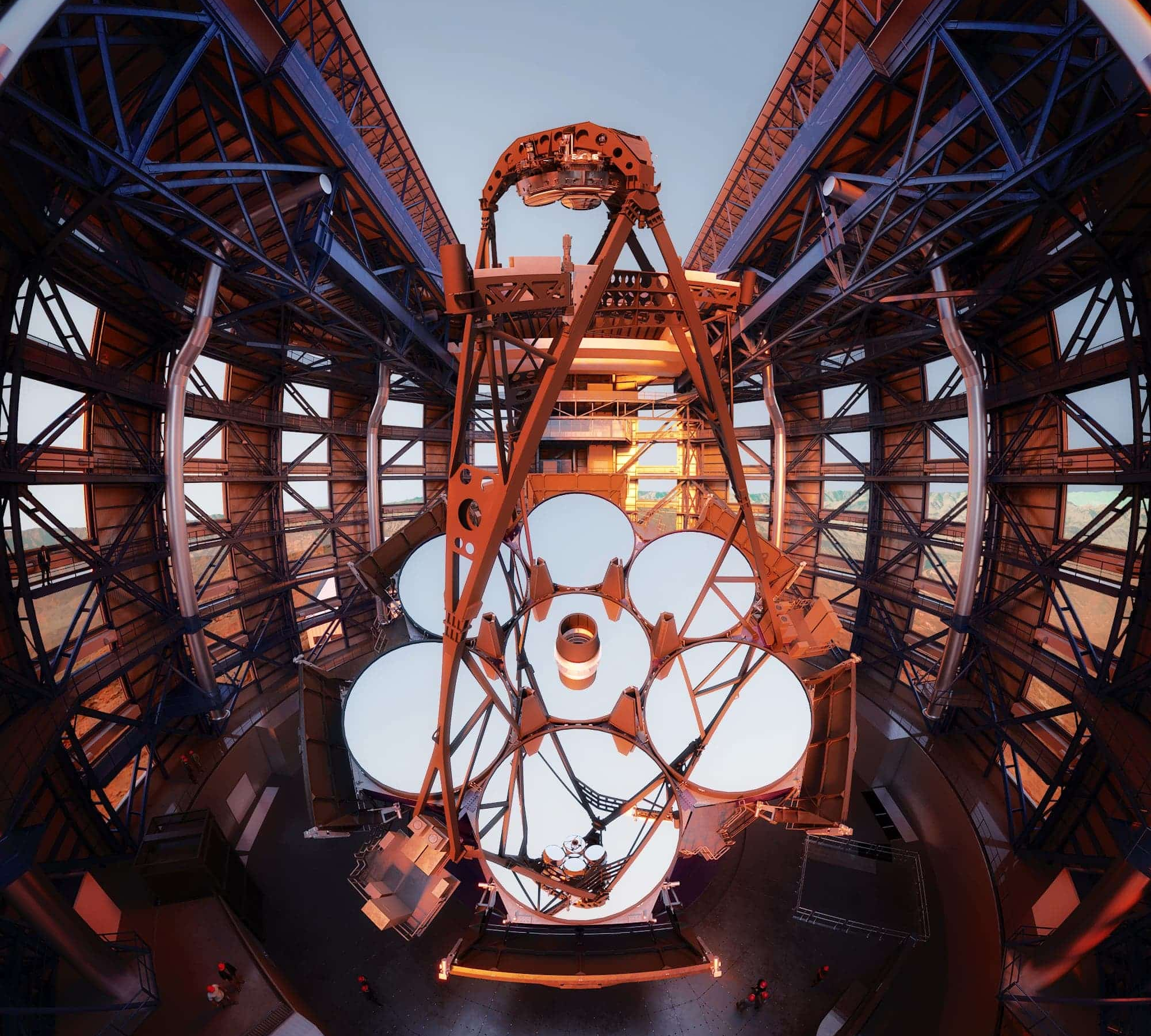
An artistic rendering of how the Grand Magellan Telescope may look, if it is ever built.Image credit: GMTP Corporation
However , the National Science Board , which suggest the NSF , has propose a $ 1.6 billion crown on NSF funding for giant telescopes . That ’s less than either of the two are projected to be on their own , although allowing for the other contributors , it should just about be adequate for one .
Thestatementissued by the Board makes percipient they are not simply seeking to defer the costs , go slow until more funding comes along . Instead , it include the passport : “ NSF discuss with the Board during the May 2024 meeting its plan to pick out which of the two candidate telescope the Agency plans to continue to support , including estimated toll and a timeline for the project . ”
It ’s possible the NSF could reject the testimonial , or indeed that Congress could decide to tip an supernumerary billion and a half into uranology because they think it ’s so important . So far , that is what spokesperson of each team are banking on , at least in public , rather than squabbling over who should take anteriority . You would n’t require to bet on new money arriving , however , even if we were n’t in an era where the government activity is hamstrung by partisan fight that makes any budget allocation difficult .

Areas of the sky that could be seen by the proposed Giant Magellan Telescope and Thirty Meter Telescope. Without one of them, much of the sky will be uncovered.Image credit: US-ELTP (TIO/NOIRLab/GMTO)
Theoretically , other contributor could increase their share , but John O’Meara , chief scientist at Keck Observatory , toldSpace.com : " To my noesis , neither telescope today has a path forward without the investing by NSF . "
stargazer have been expressing their hurt , and punctuate whyboth are postulate .
Those consociate with other areas of science may have little sympathy ; perhaps restfully mock those who think they ’d get two shiny novel toys and have to settle for one . However , the two instrument have been specifically designed to cultivate together . No location on Earth can see the entire sky ; only having one musical instrument in the Northern Hemisphere and one in the Southern offers complete insurance coverage . Each has been design to maximize sealed capacities on the Assumption of Mary the other will take up the slack in other areas .
At first sight , the TMT would appear the lucid subsister . Being in the Northern Hemisphere , it can tag squad with the ELT , and a proposed US location could provide a constituency to lobby for it .
However , the TMT is sostrongly opposedby Native Hawaiians thatconsideration has been givento moving it to the Canary Islands – still in the north , but part of Spain . Moreover , underprice either would stand for letting almost all the money spent so far go to waste , and that ’s a lot more on the GMT , which is much further advanced , than the TMT .
Most people can think of great deal of other worthy America for $ 1.5 billion , whether it be in aesculapian enquiry to bring around diseases , other mannikin of scientific discipline focus on global crisis , or away science entirely . On the other deal , basic research has a long story of paying for itself in room that were quite unexpected at the time . build both telescopes would stand for an extra $ 5 in taxis per American , not per year , but as a once - off . Their combined cost will be far less than the JWST , and each will last much longer .
Allocating budget is always hard , and gets hard still when liken welfare that are likely to be so dissimilar – in this case , knowledge for knowledge ’s saki set against choice with clear hard-nosed , albeit uncertain , payoffs . Compared to that , the NSF may determine that choosing between two official document with dissimilar , but imbrication , mental ability is relatively easy .
